Blog
What Is Hydrocodone Acetaminophen 5/325? Uses & Risks

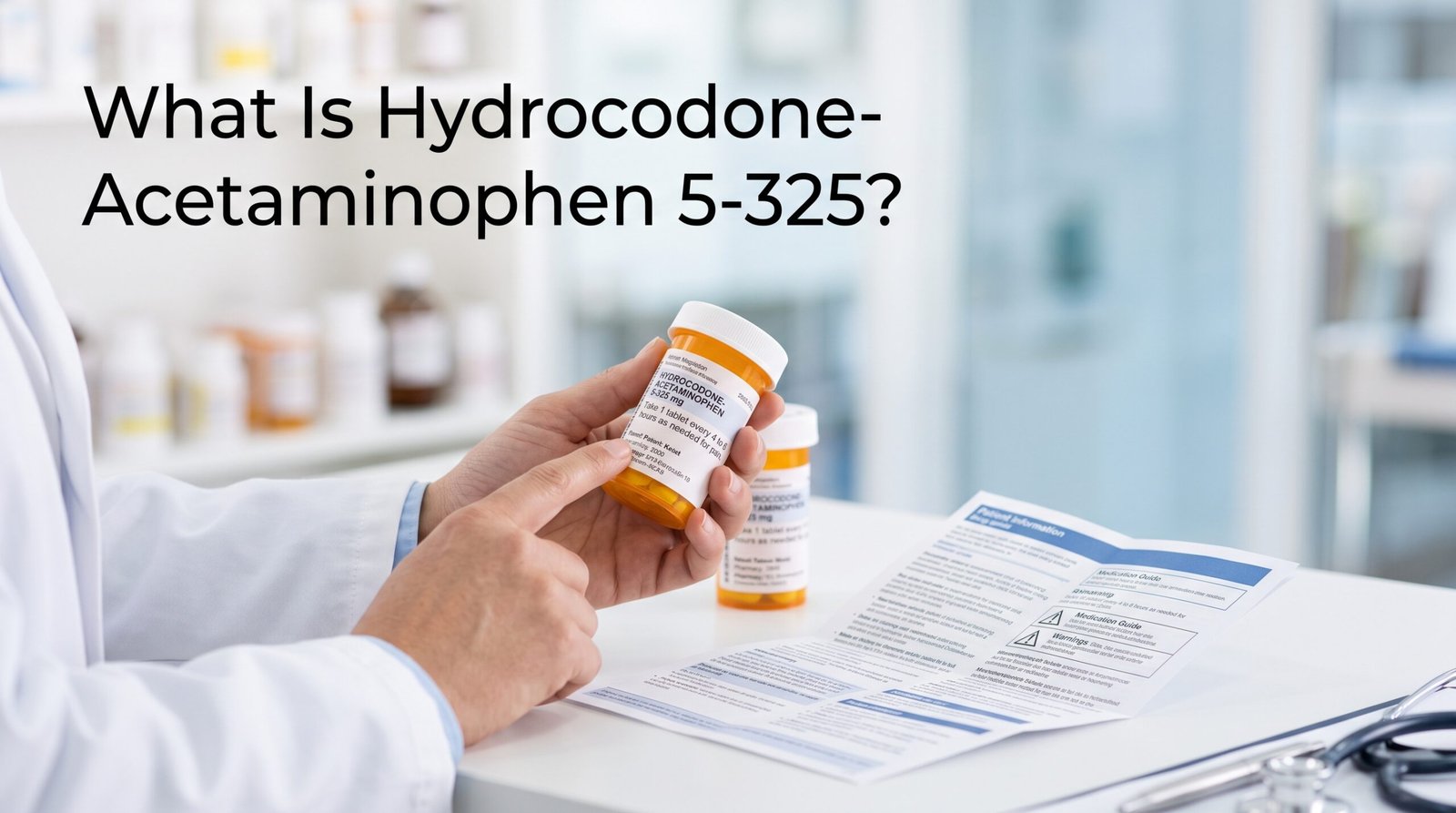
Some medicines have names that sound complicated but follow a simple idea. Hydrocodone acetaminophen 5/325 is one of them. It is a two-in-one pain medicine: a small amount of an opioid and a standard dose of a familiar over-the-counter drug.
But simple does not mean casual. This medicine is powerful, tightly regulated, and easy to misuse by accident. Understanding what it is, how it works, and where it fits among other pain treatments can help you use it safely or make wiser choices with your doctor.
This guide gives you a complete profile, from the science behind it to everyday safety habits.
What Is Hydrocodone Acetaminophen 5/325?
Hydrocodone acetaminophen 5/325 is a prescription combination pain medicine. Each tablet contains 5 mg of hydrocodone, an opioid, and 325 mg of acetaminophen, a non-opioid pain and fever reducer. It is used for short-term treatment of pain that is serious enough to require an opioid.
Medicine Snapshot
| Feature | Details |
|---|---|
| Generic name | Hydrocodone bitartrate and acetaminophen |
| Strength | 5 mg / 325 mg per tablet |
| Drug class | Opioid analgesic combined with a non-opioid analgesic |
| Availability | Prescription only |
| U.S. controlled status | Schedule II |
| Main use | Short-term treatment of severe pain when other options are not enough |
| Typical onset | About 30 to 60 minutes |
| Typical duration | About 4 to 6 hours |
| Main warnings | Addiction, slowed breathing, accidental exposure, liver injury |
Understanding the Name
Medicine names can feel like a code. Here is how to read this one.
“Hydrocodone Bitartrate”
The opioid part. Bitartrate is a salt form that helps the drug dissolve and absorb properly.
“Acetaminophen”
The non-opioid part. In many countries it is called paracetamol. Tylenol is a well-known brand.
“5/325”
The strength. Five milligrams of hydrocodone and 325 milligrams of acetaminophen are in each tablet.
How Does Hydrocodone Acetaminophen Work?
The two ingredients act in different parts of the pain pathway. That is the idea behind the combination.
How Hydrocodone Works
Hydrocodone is an opioid agonist. It activates mu-opioid receptors in the brain, spinal cord, and elsewhere. When these receptors are activated, pain signals are dampened, and the brain’s response to pain changes.
The liver also converts a small part of hydrocodone into another active opioid called hydromorphone. This conversion depends on an enzyme that differs from person to person, which is one reason people can respond differently to the same dose.
How Acetaminophen Works
Acetaminophen is believed to act mainly in the central nervous system. It reduces the production of certain chemicals involved in pain and fever. It does not meaningfully reduce swelling.
Why Two Drugs Can Be Better Than One
Using two drugs with different actions can improve pain relief. It may also mean a lower opioid dose is needed than if the opioid were used alone. This is a standard principle in modern pain care.
What Is It Approved to Treat?
The tablets are approved for pain severe enough to require an opioid medicine when alternative treatments are inadequate. This phrase is important. It means opioids are not meant to be first choice for every pain.
Typical Short-Term Uses
- Pain after surgery
- Pain after a dental extraction or oral surgery
- Acute injuries such as fractures
- Short-term pain from certain medical conditions
Where It Is Not a Good Fit
- Mild to moderate pain that responds to over-the-counter medicines
- Many types of long-term pain, where risks may outweigh benefits
- Headaches, in most cases, because opioids can worsen headache patterns
- Anxiety, stress, or sleep problems
The Shift Toward Caution
In recent years, health authorities have urged more careful opioid prescribing. Guidelines encourage non-opioid treatments first when possible and, when opioids are needed, the lowest effective dose for the shortest time.
Benefits and Limits of This Medicine
Potential Benefits
- Effective relief for short-term severe pain in many people
- A lower opioid amount per tablet than higher-strength versions
- Familiar and widely used by clinicians
Limits and Drawbacks
- Side effects such as drowsiness, nausea, and constipation
- Risk of dependence and addiction
- A ceiling on acetaminophen amounts that limits how many tablets you can safely take
- It does not treat the cause of pain, only the symptom
Long-Term Concerns: Tolerance, Dependence, and Addiction
These three terms are often confused, so let us separate them.
Tolerance
Tolerance means the body gets used to the medicine, and the same dose gives less relief over time. It can develop with regular use.
Physical Dependence
Physical dependence means the body adapts to the drug and reacts when it is reduced or stopped suddenly. This can happen even when you take the medicine exactly as prescribed. It is not the same as addiction.
Addiction (Opioid Use Disorder)
Addiction is a medical condition marked by compulsive use despite harm. It can involve cravings, loss of control, and neglect of daily responsibilities. Risk factors include a personal or family history of substance use, mental health conditions, and prolonged use.
Getting Help Early
If you notice that you are taking more than prescribed, thinking about the medicine constantly, or feeling unable to stop, tell your prescriber. Effective treatment exists, and asking for help is a sign of strength. In the United States, the SAMHSA National Helpline (1-800-662-4357) offers free, confidential support and referrals at any hour.
Withdrawal and Stopping the Medicine
After a few days of use, most people can stop without trouble. After weeks or longer, stopping suddenly can cause withdrawal.
Possible Withdrawal Symptoms
- Restlessness and anxiety
- Muscle aches
- Sweating and chills
- Runny nose and watery eyes
- Nausea, vomiting, and diarrhea
- Trouble sleeping
Stopping Safely
If you have used the medicine for more than a short time, ask your prescriber how to taper. A slow reduction can ease withdrawal. Do not stop long-term use abruptly without medical advice.
Safety Warnings You Should Know
Slowed Breathing
The most dangerous risk of any opioid is slowed or stopped breathing. It is more likely at the start of treatment, after a dose change, or when combined with alcohol or sedatives.
Liver Injury From Acetaminophen
Too much acetaminophen can injure the liver. The risk is higher with heavy alcohol use, existing liver disease, and taking several acetaminophen-containing products. Track your total from every source.
Accidental Exposure
One tablet can be fatal for a child. Keep the medicine locked and out of reach.
Interactions With Other Substances
- Alcohol: adds to drowsiness and breathing risk
- Benzodiazepines and sleep medicines: can cause deep sedation
- Other opioids: can add to side effects and overdose risk
- Certain antibiotics and antifungals: can raise hydrocodone levels
- MAO inhibitors: can cause serious reactions
Hormone and Adrenal Effects
Long-term opioid use can affect hormone levels and, rarely, cause adrenal insufficiency. Tell your doctor about unusual fatigue, weakness, dizziness, or low blood pressure.
How Does It Compare With Other Pain Medicines?
This table offers a broad comparison. It is not a ranking and does not replace medical advice.
| Medicine | Class | Notes |
|---|---|---|
| Hydrocodone/acetaminophen | Opioid + non-opioid | Short-term severe pain; controlled substance |
| Oxycodone/acetaminophen | Opioid + non-opioid | Similar use; also controlled |
| Codeine/acetaminophen | Opioid + non-opioid | Milder opioid; response varies widely between people |
| Tramadol | Opioid-like | Also affects other brain chemicals; has its own interaction risks |
| Ibuprofen or naproxen | NSAID | Treats pain and inflammation; stomach, kidney, and heart cautions |
| Acetaminophen alone | Non-opioid | Pain and fever; liver caution at high amounts |
The best option depends on the type of pain, your health, other medicines, and your history. Your prescriber can weigh these factors.
Non-Opioid Strategies That Can Help
Many people find that a mix of strategies controls pain well with less medicine.
- Ice and heat: Ice reduces swelling early. Heat helps muscle stiffness.
- Elevation and rest: Useful after injuries and procedures.
- Gentle activity: Short walks or approved exercises can prevent stiffness.
- Relaxation and breathing exercises: These can lower how intensely you feel pain.
- Physical therapy: Guided exercises support healing.
- Non-opioid medicines: Under medical advice, acetaminophen, NSAIDs, or other options may be suitable.
Who Needs Extra Caution?
Older Adults
Older adults are more sensitive to sedation, confusion, and falls. Lower starting amounts are common.
People With Kidney or Liver Disease
The body may clear the medicine more slowly. Dose changes and extra monitoring may be needed.
People With Breathing Conditions
Asthma, COPD, and sleep apnea can make opioid use riskier.
Pregnancy and Breastfeeding
Opioid use during pregnancy can lead to withdrawal in the newborn. Opioids can also pass into breast milk and cause sleepiness or breathing problems in a baby. Discuss risks and alternatives with your clinician.
People With a History of Substance Use
Those with a history of substance use disorder may need alternative pain plans and close support.
Recognizing an Overdose and Responding
Know these signs, and make sure the people around you do too.
Signs of an Opioid Overdose
- Slow, shallow, or no breathing
- Gurgling or snoring sounds
- Unresponsiveness or cannot be woken
- Pinpoint pupils
- Blue or gray lips and fingertips
- Cold, clammy skin
What to Do
- Call your local emergency number right away.
- Give naloxone if it is available and you know how to use it.
- Try to keep the person awake and breathing. Lay them on their side if they are not responsive and breathing.
- Stay until help arrives.
Naloxone is available in many places without a prescription or through your pharmacist. Ask whether it makes sense to keep a dose at home.
A Quick Daily Safety Checklist
- Do I know that my tablet contains both hydrocodone and acetaminophen?
- Have I added up my acetaminophen from every product today?
- Have I avoided alcohol and other sedatives?
- Is the bottle locked away?
- Did I write down the time of my last dose?
- Am I taking it only as prescribed?
A few seconds on this checklist can prevent serious problems.
Questions to Bring to Your Appointment
- Why is an opioid the right choice for my pain?
- How long should I expect to need it?
- What is my maximum daily acetaminophen amount?
- What other medicines should I avoid?
- How will we decide when to stop?
- Should I keep naloxone at home?
Conclusion
What is hydrocodone acetaminophen 5/325? It is a prescription pain medicine that combines 5 mg of the opioid hydrocodone with 325 mg of acetaminophen. It can bring real relief after surgery, injury, or dental work, and it is best used for a short time at the lowest effective amount.
Its risks are just as real: slowed breathing, dependence, accidental exposure, and liver damage from too much acetaminophen. Smart habits make a major difference. Read the label, count your acetaminophen, avoid alcohol and sedatives, store the bottle securely, and talk to your prescriber early if pain is not controlled or if you are worried about using the medicine.
When used with care and good guidance, this medicine can help you get through a painful period and return to normal life.
FAQ
What is hydrocodone acetaminophen 5/325 used for?
It treats short-term pain that is severe enough to need an opioid when other treatments are not enough, such as pain after surgery or injury.
Is hydrocodone acetaminophen 5/325 an opioid?
Yes. The hydrocodone in it is an opioid. The acetaminophen is a non-opioid pain and fever reducer.
Is it addictive?
It can be. Opioids carry a risk of dependence and addiction, even when taken as prescribed. Using the smallest amount for the shortest time lowers the risk.
What is the difference between 5/325 and 10/325?
Both contain 325 mg of acetaminophen per tablet. The 10/325 tablet has double the hydrocodone amount, so it is a stronger opioid dose per tablet.
Can I take it every day?
It is usually intended for short-term use. Long-term daily use should only be under close medical supervision.
Can it damage my liver?
The acetaminophen can harm the liver if you take too much. Staying within your daily limit and avoiding alcohol and other acetaminophen products helps protect your liver.
Is it safe during pregnancy?
Opioids carry special risks in pregnancy. Do not take them without medical guidance.
What should I do if I feel no relief?
Do not take extra tablets. Wait the time on your label, and call your prescriber or pharmacist if your pain is not controlled.